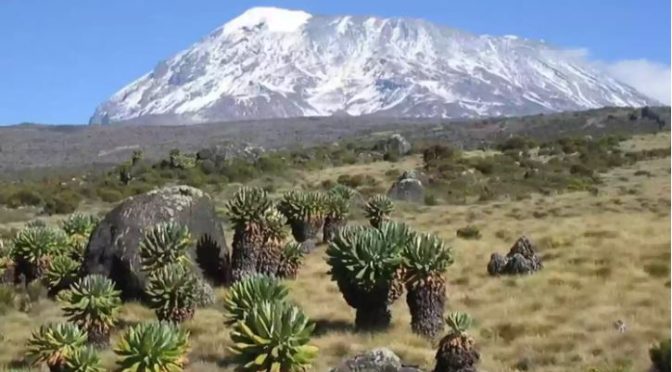
Reaching the Uhuru peak of Mount Kilimanjaro in Tanzania is in the bucket list of many. Reaching Uhuru Peak (5,895m) does not require technical mountaineering skills. However, one needs to be physically fit and mentally prepared because the days spent on the mountain can take a toll on anyone who is not well acclimatised.
Many people considering trekking Kilimanjaro ask what the best route is. “Best” can mean anything. But perhaps most people asking this question mean which route guarantees success.
To ensure success summiting Kilimanjaro, one needs to anticipate the difficulties and make plans to surmount them.
These are:
1. General fitness
2. Endurances fitness.
3. Altitude
1. General fitness: Establish that the body is fit enough to withstand sub-zero temperatures and other vagaries of outdoor living for five to six days. It is also important to note the bod’s ability to adabt to abrupt change of diet. Hand in hand to this is the mental attitude and willingness to go through it.
2. Endurance fitness: In general the body should be able to withstand four contiguous days of uphill walking for five to six hours daily while carrying about six Kilograms of gear. This calls for strict regimes of exercises that can be done in the house, field or gym, such as cardio, squats, jogging, treadmill or skipping rope.
3. Altitude: Hiking and trekking at least once every two months preferably in altitudes over of 2500 metres e.g. Ngong hills, Longonot, Oldonyo sabuk, Kinari forest, Elephant hill, Kipipiri, mount Kenya (preferably to Leanna point) will give the body the much needed acclimatisation.
It is important to deliberately choose at least one wet season hike in order to test rain gear.
Acclimatisation and fitness
Popular Routes
-
- Lemosho Route: Widely considered the best overall. It starts on the western side, is highly scenic, features a very high summit success rate, and offers excellent acclimatisation.
- Machame Route: Often called the “Whiskey Route.” It is the most popular, highly scenic, and physically demanding, but it requires a careful pace.
- Marangu Route: The only route with hut accommodations. It is known as the “Coca-Cola Route” and is shorter, but its steeper ascent results in lower summit success rates.
- Northern Circuit: The longest and most remote route. It circles the northern slopes and is ideal if you want to avoid crowds and maximise your acclimatisation.
-
- Fitness: You do not need to be a professional athlete, but you should be comfortable walking 4 to 8 hours daily. Focus on long day hikes with elevation gain, stair climbing, and general cardiovascular endurance.
- Acclimatisation: Altitude sickness is the primary reason people fail to summit. Opt for longer itineraries, “hike high, sleep low” strategies, and keep a very slow and steady pace. [1, 2, 3]
Practical Information
-
- Local Guides: All climbers are required by Kilimanjaro National Park to hike with a licensed guide and crew. Use reputable tour operators (many base out of Moshi or Arusha) to ensure porter safety and well-maintained equipment.
- Cost & Booking: Permits, guides, and food typically cost anywhere from $2,000 to $4,500+ USD per person, depending on the route and the number of days.
- Best Time to Go: The driest and warmest months are typically from January to March and June to October.
Below is a list of items that one needs to collect and test in advance in order to make the climb as friendly as possible.
I have used the key below to rate the items
Key
**** Crucial to have
*** Important to have
** Good to have
* luxury
Related posts:
 Mount Kilimanjaro Packing List
 Kijabe Hill Hiking Trail
 Kijabe hill – Nathan hill Hiking Trail
 Karura Forest Hiking Trails
Powered by YARPP.