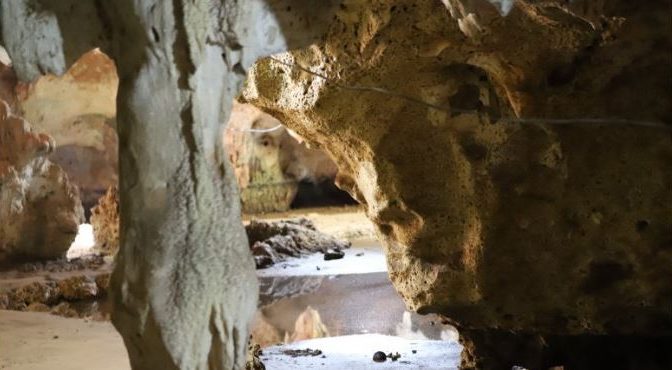
Caving is a thrilling outdoor activity. In Kenya, there are many caves due to widespread volcanic activity in the past, many of which remain largely unexplored. For anyone drawn to the underground world, Kenya offers the kind of adventure that could take a lifetime to experience fully.
Most of Kenya’s caves are lava tube caves, formed during ancient volcanic activity. According to geologists, molten lava flowed downhill during volcanic activity. The lava on the surface cooled and solidified while the lava beneath continued to flow. Eventually, the flowing lava drained away, leaving behind long, hollow tunnels. When openings formed in the hardened surface, a cave was formed. Later, air and other elements would shape the cave. The result is a natural maze of tunnels, chambers, and passages—some wide and accessible, others tight and mysterious.
You cannot talk about caves in Kenya and not mention the 8-kilometre Shetani Caves. The Suswa Caves attract many visitors because of their complex structure. They feature interconnected tunnels and even a rare “double-deck” formation, where one cave runs above another. The Leviathan Cave in the Chyulu Hills has reserved its place due to its sheer size. It is an 11-kilometre system that stands as one of the longest lava tubes in Africa.
Besides their geology, caves in Kenya have historical and cultural significance. Nowhere is this more evident than in the so-called Mau Mau Caves, scattered across the Mount Kenya and Aberdare regions. These are not single, defined caves but rather a network of shelters, overhangs, and hidden chambers tucked behind waterfalls and within dense forest landscapes and farmlands. Many are easy to miss unless you know exactly where to look.
The name “Mau Mau Caves” comes from their use during Kenya’s struggle for independence. During the seven-year revolt against British colonial rule, freedom fighters used these caves for shelter. For some people, visiting these caves reminds them of that important part of the history of Kenya. Caving in Kenya, therefore, combines geology, history, and culture
If you are a neophyte, be prepared. Caving can be physically demanding and sometimes risky. Take with you suitable caving gear as recommended by your guide. These may include helmets, headlamps, and footwear. We highly recommend exploring caves with experienced guides or organised groups.
Hint: The Cave Exploration Group of East Africa (CEGEA) provides guidance, training, and organised expeditions for both beginners and experienced cavers. Many tour companies in Kenya also offer caving as part of their adventure packages, making it accessible even for first-timers.
In the end, caving in Kenya is more than an activity—it is an invitation to explore a hidden world beneath your feet. One trip is enough to spark your curiosity, but it will never be enough to see it all.
If you want, I can make it more punchy/viral in your signature storytelling style—or tailor it for a blog, social post, or travel guide.
Caves Near Nairobi
Mbagathi Waterfall on the Oloolua Nature Trail in Karen, Nairobi. Paradise Lost is located in Kiambu. A
Other notable caves
The Suswa Caves are in Mt Suswa in the Rift Valley. Shimoni Slave Caves of Kwale County, used as holding pens by slave traders; Ali Barbour’s Cave in Diani. Kitum Cave is located in Mount Elgon National Park. It serves as a salt lick for elephants. Panga ya Saidi is an archaeological site in Kilifi County. Fikirini Three Sister Caves Located in Kwale County.
Related posts:
 White water Rafting
 Kijabe Hill – Kinari Ridge
 Ragia Forest-Sasumua River Hiking Trail
Mount Kilimanjaro Packing List
Ragia Forest-Sasumua River Hiking Trail
Mount Kilimanjaro Packing List
Powered by YARPP.