Category Archives: wiki

John Ainsworth’s apartheid plans for the early Nairobi

John Ainsworth’s apartheid plans for the early Nairobi

THURSDAY APRIL 4 2013


John Ainsworth left a checkered mark on Nairobi. For not only is he the man credited with building the city “from scratch”, he also had a rocky relationship with the natives, who may never forget that during his days in office some of the largest British land-grabs got underway. Photo/FILE

John Ainsworth left a checkered mark on Nairobi. For not only is he the man credited with building the city “from scratch”, he also had a rocky relationship with the natives, who may never forget that during his days in office some of the largest British land-grabs got underway. Photo/FILE

In Summary

  • The colonial pioneer credited with establishing Nairobi’s current demarcations is also regarded as one of the most vociferous plunderers of African lands

By MARGARETTA WA GACHERU margacheru@gmail.com

John Ainsworth may be best known for being “the man who built Nairobi” at the turn of the 20th century, when the town was little more than an ordinary railway stop on the line from Mombasa to Kampala.

And indeed, during the eight years that Ainsworth served as one of the chief administrators in the colonial government, he achieved a great deal.

Called from Machakos to serve as a top civil servant at the swampy town populated more by lions, zebra, waterbuck, dikdik and frogs than by European settlers, Ainsworth arrived in Nairobi in 1898, three years after the region had become a protectorate of the United Kingdom.

At that time, the swamp, which came right up to where the Kenya National Theatre stands today, was “chock-full of croaking frogs that kept the town busy as they croaked in unison, while behind it was a barren, open land, where hippos gnarled at the Nairobi River,” according to the Kenya-based historian, Jan Hemsing, in her 2004 book, Nairobi’s Norfolk Hotel: The First Hundred Years.

One of the more important things he did during his brief but eventful time working as London’s Chief Native Commissioner in Kenya was to plant Tasmanian Blue Gum (Eucalyptus) trees all along the edge of the swamp land since the species require gallons of water to grow well.

But his was not just a green-handed forestation initiative of Nairobi; Ainsworth knew the trees would be an organic means of draining the swamp while simultaneously beautifying the town.

He had seedlings brought in from Machakos and planted on the clear plains between what is now Upper Hill and State House Road, an area demarcated specially for European settlement.

In fact, Ainsworth was responsible for the initial demarcation of Nairobi, even though his idea of delineation would eventually lead scholars to identify colonial Kenya with an apartheid system of settlement and administration.

Seen by the Foreign Office as one of the most competent colonial civil servants in East Africa, Ainsworth stamped his segregationist authority in Nairobi by demarcating seven districts in the town.

They were the Railway Centre, Indian Bazaar, Railway Quarters, European Business and Administration Centre, Dhobi Quarters, European Residential Areas, and the Military Barracks.

Africans (apart from those working for the Railways) were left to fend for themselves on the east side of the town.

He did not even include them in the overall town plan, which goes some distance in explaining why that sector of the city now known as Eastlands is filled with sprawling, unplanned informal settlements.

He also began in 1900 to demarcate the first roads. They were initially situated in the Indian Bazaar and included Station Street, River Street, Punjabi Street, and Khoja Mohola Street.

But the British author, Elsbeth Huxley, was not impressed. In her colonial classic, White Man’s Country (all about the achievements of the aristocratic Lord Delamere), she called Nairobi a town with “one-cart tracks”.

But to his credit, it was during Ainsworth’s time in office that the first church was constructed, the first two hotels were born — the Stanley (established by Mayence Bent in 1902) and the Norfolk (constructed by Major Ringer and Aylman Winecurts) — and the first cash crop plantations were put into place, starting with sisal.

The coffee, tea, pyrethrum, sugar, and cotton plantations would get established years after he had left.

Ainsworth, together with Canon Harvey Leakey of the Church Missionary Society — the grandfather of palaeontologist-turned-politician Richard Leakey and father of esteemed archaeologist Louis Leakey — among other European settlers, started up the East African Natural History Society which would eventually become the National Museums of Kenya.

He also established the East African Horticulture Society and did a good deal of experimental farming on lands he obtained while living and working in Nairobi.

But Ainsworth is also the first colonial administrator to set aside “native reserves” where Africans, whose lands had already been taken from them by the colonisers, were meant to reside.

Ainsworth is also one of those first-generation colonial representatives to be part of the historic 1904 “Agreement” between His Majesty’s Commission for the East African Protectorate and the chiefs of the Maasai, including Chief Lenana, to allow the British to take over huge tracts of Maasai land while removing the Maasai to the newly established “native reserves”.

The Agreement further “allowed (the Maasai) to occupy land between the Mbagathi and Kiserian streams”, which of course was a fraction of what the Maasai elders essentially gave away.

Ainsworth is also said to have been the one responsible for translating details of the Agreement for the Africans.

But one cannot help but wonder how much of the Maasai language he actually understood well enough to translate such an important document so that the “natives” would truly understand the implications of their actions.

It was Ainsworth who wrote frankly in his memoir: “I can assure you that it [was] at times uphill and tiring work breaking down the walls of barbaric ignorance and superstition and introducing in their places an acceptable form of civilisation.”

John Dawson Ainsworth was born in 1864 in the UK and lived to be 100, passing on in 1964. He was 25 in 1889 when he first landed in Mombasa, an employee of the Imperial British East African Company

Prior to his arrival, British land surveyors had already come to Kenya and identified much of the most fertile land as “unpopulated” and ripe for colonial settlement.

There was no knowledge among the Europeans of African land ownership systems, such as the Kikuyu system of gethaka, where certain areas belonged to specific families.

Nor were colonial civil servants aware of the fact that in the early 1890s, there had been famine and a series of epidemics — rinderpest and smallpox — leading to the decimation of Maasai herds and human beings as well.

According the Jens Finke, the Kikuyu had also been profoundly affected by these calamities such that they had withdrawn from the very lands that European surveyors described as “empty” and ripe for colonial settlement. These included lands in Nairobi, Kiambu, Thika, and Ruiru.

According to Finke, Kikuyu elders who witnessed the early appropriation (theft) of their lands by the British reported this crime to Ainsworth, who had just recently arrived from Ukambani.

Understandably, he sided with his kinsmen and basically informed the Africans that they had little choice but to understand that times had changed and conditions were different now.

Just before Ainsworth had arrived, the new administration representing the Protectorate had responded pro-actively to the African “threat”.

They had sent out small military expeditions to keep track of both the Kikuyu and the Kamba, whose trade routes they had disrupted during Ainsworth’s days serving in Ukambani.

Scholars of Kenyan history now believe that there had been thriving trade relations between the Kikuyu, Kamba, and Maasai, but that they had been “shattered”, according to Finke and others, by British overlords.

Apparently, Ainsworth had been a bit more benign towards the Africans when he was an employee of the Imperial British East African Company.

Arriving in the region in 1889, his initial job was being in charge of the company’s transport and supply department.

But he quickly proved himself to be exceedingly competent such that before he left Ukambani, he was the commanding officer for IBEAC in Machakos, a town which was established as the original supply station for the railways.

What the British apparently liked about the area was the well-developed trading networks that the Kamba had already established.

Initially, Ainsworth had only praise for the Kamba, whom he assured his bosses based at Mombasa were willing and ready to work for the colonial regime.

Ainsworth even supplied them with munitions to protect the British food supply lines from the Maasai.

However, the IBEAC became increasingly uncomfortable with the Kambas’ involvement in the East African slave trade.

The company’s attempts to disrupt the trade, including the Kambas’ activities in it, is part of the reason the London Foreign Office chose to take over direct control of Kenya and make it a Protectorate in 1895.

Ironically, this led to the programme of constructing the railway using the very same caravan lines that the Kamba had created while conducting their trade.

In other words, the Kamba were not terribly pleased with Ainsworth before he left for Nairobi.

Their trade relations had been shattered and their activities were now being monitored by British troops who were already feeling Africans’ resistance to colonial rule.

But it was the Kikuyu who may have felt the most pain under the new colonial regime, which had already begun fencing off the best land and excluding both Maasai and Kikuyu from entering what had previously been either Maasais’ grazing grounds or lands that the Kikuyu had cultivated for generations.

According to Finke, the Kikuyu were dispossessed of between 30 and 70 per cent of their prime properties by British settlers who fenced off ranches and farms, especially in the area subsequently known as the White Highlands, around the Aberdares or the Nyandarua mountain range.

Before Ainsworth left Nairobi in 1906, he had become one of the most powerful officers in the British East African Protectorate. Operating out of what is now frequently referred to as “the old PC’s office”, the space that was called the Nairobi Gallery until quite recently when it became another site where Joseph and Sheila Murumbi’s Africana Collections reside, Ainsworth left Nairobi before Kenya officially became a colony of the British Empire and the Colonial Governor’s position had been established.

But as the most dynamic of the first generation of British overseas officers, he made a checkered mark on Nairobi.

For not only is he the man credited with building the city “from scratch”, he also had a rocky relationship with the Africans who may never forget that during his days in office, some of the largest British land-grabs got underway.


Uasin Gishu County


Coat of arms of Uasin Gishu County

Location in Kenya

From Wikipedia, the free encyclopedia

Uasin Gishu County is one of the 47 counties of Kenya, located in the former Rift Valley Province. The city of Eldoret (capital and largest town in the county) is the county’s administrative and commercial centre.

Uasin Gishu is located on a plateau and has a cool and temperate climate. It borders Trans-Nzoia County, Kenya.

Its name comes from the Illwuasin-kishu Maasai clan. The land was the grazing area of the clan. They surrendered the land to the colonial government in the Anglo-Maasai agreement of 1911, and were subsequently pushed towards Trans Mara. The plateau that they once occupied was then registered in its Anglicised version, Uasin Gishu.[2]

Urban centres

Eldoret

Moi’s Bridge

Matunda

Burnt Forest

Jua Kali

Turbo

Notable Historical events

Proposed Jewish Homeland – In 1903, the area was proposed as a potential Jewish homeland, as the British Uganda Programme.

Boer Settlements – In 1908, fifty eight families of Afrikaans-speaking South Africans settled in Uashin Gishu plateau. They were followed by sixty more families in 1911 and more later.[4] The town of Eldoret was established in the midst of the farms they created.

Administrative divisions[edit]

Division Population* Urban pop.* Headquarters

Ainabkoi Ainabkoi

Kapseret Kapseret

Kesses Kesses

Moiben Moiben

Soy Eldoret

Turbo Turbo

* 1999 census.[5][6]

Constituencies[edit]

The county has six constituencies:


Narok County


Location in Kenya
Location in Kenya

Coordinates:  https://upload.wikimedia.org/wikipedia/commons/thumb/5/55/WMA_button2b.png/17px-WMA_button2b.png1°15′S 35°37′ECoordinateshttps://upload.wikimedia.org/wikipedia/commons/thumb/5/55/WMA_button2b.png/17px-WMA_button2b.png1°15′S 35°37′E

Kenya was divided into eight provinces, prior to 2013, which were subdivided into 47 counties. It is situated in the southern parts of the Rift Valley Province.

In 1994, Trans Mara District was split from Narok District.

The County has six constituencies:

Narok County WardsNarok Town

  1. Olpusimoru
  2. Olokurto
  3. Nkareta
  4. Olorropil
  5. Melili
  6. Majimoto/ Narosura
  7. Ololulung’a
  8. Melelo
  9. Loita
  10. Sogoo
  11. Sagamian
  12. Central
  13. Keyian
  14. Angata Barikoi
  15. Shankoe
  16. Kimintet
  17. Lolgorian
  18. Ilmotiok
  19. Mara
  20. Siana
  21. Naikara
  22. Ilkerin
  23. Olomasani
  24. Mogondo
  25. Kapsasian
  26. Mosiro
  27. Ildamat
  28. Keekonyokie
  29. Suswa
Ngorong Ngorongo
Pardon moi


Nakuru County

Nakuru County

Flamingos at Lake Nakuru

Location of Nakuru County in Kenya

Coordinates:  https://upload.wikimedia.org/wikipedia/commons/thumb/5/55/WMA_button2b.png/17px-WMA_button2b.png0°30′S 36°0′ECoordinateshttps://upload.wikimedia.org/wikipedia/commons/thumb/5/55/WMA_button2b.png/17px-WMA_button2b.png0°30′S 36°0′E

Nakuru County is a county in Kenya. The capital and largest town is Nakuru, although Naivasha is another major significant urban centre. With a population of 1,603,325[2] (2009 census), it is the fourth largest county in Kenya after NairobiKakamega and Kiambu in that order in terms of population. Nakuru County has an area of 2,325.8 km². Until 2013, it formed part of Rift Valley Province.

Sites of Interest[edit]

Nakuru County is home to Lake Nakuru and Lake Naivasha some of the Rift Valley soda lakes. Lake Nakuru is best known for its thousands, sometimes millions of flamingoes nesting along the shores. The surface of the shallow lake is often hardly recognisable due to the continually shifting mass of pink. The number of flamingoes on the lake varies with water and food conditions and the best vantage point is from Baboon cliff. Also of interest, an area of 188 km around the lake fenced off as a sanctuary to protect Rothschild giraffe and black rhinos.

Other sites of interest around Nakuru include Menengai Crater, an extinct volcano 2,490m (8,167 ft) high. The views of the crater itself, as well as the surrounding countryside, are spectacular.

Hyrax Hill Prehistoric Site, discovered by the Leakeys in 1926, is considered a major Neolithic and Iron Age site. The adjoining museum features finds from various nearby excavations.

The second largest surviving volcanic crater in the world, the Menengai Crater is 2,242 meters above sea level at its highest point. The crater plunges 483 m down from the rim and the summit is accessible by foot or vehicle 8 km from the main road. The mountain is also surrounded by a nature reserve.

RVIST[clarification needed] is a tourist attraction.

Urban Areas[edit]

Surrounding towns include Lanet, which lies approximately 10 km from Nakuru is predominantly a residential town and is home to an army base. Njoro lies 20 km from Nakuru and is a small agricultural town with a local university aimed at promoting agricultural development in Kenya, namely Egerton University (est. 1934).

Urban Centres

Nakuru

Naivasha

Molo

Gilgil

Njoro

Mai Mahiu

Subukia

Dundori

Salgaa

Mau Narok

Bahati

Rongai

Olenguruone

The Nakuru County Peace Accord (or “Rift Valley Peace Accord”) refers to the peace agreement signed on 19 August 2012 between elders of the Agikuyu (see also Kikuyu) and Kalenjin communities as well as other ethnic groups of Kenya.[6]

The agreement was designed to address sources of ethnic conflict and a history of violence in the rift valley region of Kenya.[7] It was signed following a 16 month-long peace process led by the National Cohesion and Integration Commission and the National Steering Committee on Peace Building and Conflict Management

Turkana County

Turkana County

Turkana County is a county in the former Rift Valley Province of Kenya. Turkana is the second largest (after Marsabit County)and also the north-western most county in Kenya. It is bordered by the countries of Uganda to the west; South Sudan and Ethiopia, including the disputed Ilemi Triangle, to the north and northeast; and Lake Turkana to the east. To the south and east, neighbouring counties in Kenya are West Pokot, Baringo and Samburu Counties, while Marsabit County is located on the opposite (i.e. eastern) shore of Lake Turkana.

Four sites of Stone Age cultures are situated upon tributaries along the west side of Lake Turkana in West Turkana; at Lokalalei, Kokiselei and Nadung, and became of interest to archaeology beginning sometime during 1988.[2][3][4]

The earliest late Stone age industries in prehistory were found in Turkana, at the site of Lomekwi, and date to 3,300,000 years.[5][6] At the archaeological site of Nataruk, in Southwest Turkana, scientists have discovered the oldest evidence of inter-group conflict in the past, establishing that warfare occur between groups of hunter-gatherers.[7]

Direct influence by colonial forces, in the form of pacification within the district began in 1900 and ended in 1918.[8]

During 1926, the entire Turkana people were subjugated to a body of the British military who subsequently restricted their movements to an area of Kenya, forcing these to settle in the area known now as the Turkana County.[9][10]

During 1958, the district experienced an influx of a number of people classified as belonging to the Turkana people expelled from the Kenyan settlement Isiolo town to be forcibly relocated to the Turkana district by persons of the then British colonial administration.[11]

The district maintained an all but complete isolation from influences of any other countries peoples until the time during 1976 when road-blocks on entering the district were ceased.[12]

The people of the north of the county were reported (2000) endangered by marauding Ethiopians and consequently forced to settle in southerly locations.[13]

Language[edit]

The land is known in the local language as Aturksven.[14]

Some place names in the country are attributed to the language of the Pokot and Samburu peoples, representing a tradition in the area of inhabitation by these peoples prior to displacement by the Turkana.[15]

With an area of nearly 77,000 km2, Turkana is the largest county in Kenya. Its capital and largest town is Lodwar. The county has a population of 855,399[1] (2009 census).

Turkana County is emerging to be a major source of electric power in Kenya. Kengen’s Turkwel Hydro Power Plant, situated on the southwest of Turkana County, produces hydroelectric power which is connected to the national power grid at Lessos. The county is current subject of crude oil exploration in Block 10BB and Block 13T and has potential for geothermal, solar and wind energy.

On 26 March 2012, Kenyan President Mwai Kibaki announced that oil had been discovered in Turkana County after exploratory drilling by Anglo-Irish firm Tullow Oil, and he further stated that

Uhuru Kenya had a spat with the governor

average estimated herd size of 15-20.[26]

In 2013 it was announced by UNESCO[27] that large reserves of groundwater had been discovered in Turkana County. The water was discovered using satellite exploration technology then confirmed by drilling.[28] The extraction of the water began in 2014 and it is being piped to provide water to Lodwar town for irrigation and water for the people.[29]

Government [Turkana County Government Website: http://www.turkana.go.ke/]

Lodwar Hq

Kaaling

Kainuk

Kakuma

Kalokol

Katilu

Kerio

Kibish

Lapur

Lokichar

Lokichogio

Lokitaung

Loima

Lokori

Lomelo

Oropol

Turkwel

Turkana North Constituency

Turkana Central Constituency

Turkana South Constituency

Turkana West Constituency

Turkana East Constituency

Loima Constituency

The counties have six sub counties

sub-county headquarters

Turkana Central Lodwar

Turkana North Lokitaung

Turkana South Lokichar

Turkana East Lokori

Turkana West Kakuma

Loima Lorugum


Kenya Pipeline Oil Spill Scandal

Kenyans have unwittingly been paying billions of shillings to cover up for theft of fuel at Kenya Pipeline Company in a scam that could have run for years.

The Nation is today revealing that the stolen fuel is accounted for as spillage and that, when insurers refuse to pay for it, the bill is passed on to the consumers via the Energy Regulatory Commission.

As a result, Kenyans have been financing a shadowy syndicate at KPC, until last month, when oil companies said “enough is enough” and refused to have the cost of 11 million missing litres footed by consumers.

SPILLAGE

KPC had told the oil marketing companies that more than 7.2 million litres were lost through spillage and another 4.4 million litres stolen at Koru, near Kisumu.

At best, this is a riveting fairy tale; at worst, an audacious lie

At KM391, an obscure pipeline post nine kilometres outside Konza along Mombasa Road, KPC claims there was an oil spill on March 2, 2017, and that the company lost 224,000 litres. The Nation went to KM391 and found no evidence of such a spill.

KPC has also told the oil companies that use the pipeline that this year at KM392 and KM395, inside Lisa Ranch in Makueni — owned by former Head of Civil Service and Secretary to the Cabinet Philip Mbithi — it lost 1.97 million litres in yet another spill.

But the Nation was told by the Lisa Ranch farm manager, Mr Moses Parsaoti, that there was no such spill this year, yet KPC has been pushing insurance companies to pay and the ERC to pass the bill to wananchi.

MULTI-BILLION SHILLING SCHEME

It is not clear how long this fuel theft racket has been going on, but what is certain is that it could turn out to be a daring multi-billion-shilling scheme.

As a result, a row has emerged between KPC and all the major oil companies over the whereabouts of 11.646 million litres of fuel, worth over Sh1 billion, which the company claims spilt in the fields or was stolen in the last two years.

Suspecting foul play, 10 leading oil marketers wrote a joint letter on October 26, 2018, and informed KPC that they want to bring in their own technical experts from abroad to check the accuracy of stock statements issued by the corporation and get to the bottom of what is turning out to be bogus records of loss.

TWO OPTIONS

There are only two options on the table: either the insurance companies pay for the loss, or the bill is passed to the consumer by the ERC.

KPC has no fuel of its own and holds stock in its system on behalf of oil marketers.

Sources within the State corporation told us that the industry has refused to absorb the loss and the insurers are reluctant to commit themselves. That has left the management of KPC in a quandary as oil marketers demand their oil … or the truth.

Although the KPC managing director Joe Sang was not committal on who will pick up the tab in case the insurance companies do not pay for the “loss”, we now have evidence that oil marketing companies refused to have the loss passed on to consumers via the ERC, which has often been used to sanitise the losses.

INSURERS

Mr Sang told us he was waiting for the insurers’ decision: “The insurers appointed their own loss adjustors,” he said.

“They went to the spillage site to ascertain whether the amount recorded as lost was correct. At the moment, we are in the final stages of negotiation.”

The falling-out between KPC and the oil marketing companies happened on August 23 at the Serena Hotel in Nairobi, where they refused to accept the Sh1 billion loss. Minute 4 of the meeting indicates that the oil marketing companies refused to pay and resolved that the losses should neither be passed on to them nor to consumers.

It all started on July 5, 2018, when Mr Sang wrote a letter to Supplycor Kenya Limited, the independent legal entity incorporated by the oil-marketing companies in Kenya to coordinate activities along the fuel supply chain, notifying them that in the last two years a total of 11.646 million litres of fuel got lost due to “vandalism and spillages on the main line from Mombasa to Nairobi”.

COVERED BY CIC

In his letter, Mr Sang said that “these spillages are covered by CIC Company Insurance under the Industrial All Risks policy”, and that “the company expects the above losses to be compensated by insurance to the fullest extent possible and any balances not remedied shall be recovered from the industry”. But the CiC Group chief executive Tom Gitoho differed with Mr Sang, saying the company can only pay for “loss that meets the terms of our policy.”

Mr Gitoho said that after every incident reported, they “normally engage experts” to verify.

Mr Sang, while acknowledging oil marketers have demanded a forensic audit, said the company is ready for the audit, which industry experts say will reveal the “darkest secrets of KPC”.

“I don’t think it is a forensic audit per se; all they want is to confirm their stocks within KPC,” Mr Sang said. “We have told them they are welcome and we have nothing to hide.”

FORENSIC AUDIT

The ERC director-general Robert Oimeke has also written to Mr Sang urging KPC to liaise with marketers “for a forensic audit of the product loss”.

It is the first time that oil marketers are demanding a forensic audit after years of complaints that insiders have been fiddling with the system to record false losses which are then passed to the insurers or the mwananchi.

“This will, for the first time, allow Kenyans to have an independent audit of the rot within the organisation. Everyone is scared of the latest move by oil marketers,” says a source privy to the new demand by oil firms.

The demand letter, also copied to Petroleum and Mining Cabinet Secretary John Munyes, is signed by managing directors Joe Muganda (Vivo Energy), Goke Aluko (Total Kenya), David Ohana (KenolKobil) and Macharia Irungu (Gapco Kenya).

Others are Mr Duncan Murashiki (OilLibya Kenya), Mr Paul Limo (Gulf Energy), Mr Anthony Munyasya (Galana Oil), Mr Abdirizak Ahmed (Hass Petroleum), Mr Christian Callede (Oryx Energies) and Mr Hassen Zalgaonker (Engen).

The 10 directors have told Mr Sang that they would like to carry out the forensic audit within next month.

TERMS OF REFERENCE

In their terms of reference, they say they want to validate the controls around physical stock movement, but the bottom line is that they want to know what happens to their product once it leaves the ship in Mombasa.

The second issue they want to verify is the procedure used to allocate fuel and the metering of the product.

“If I pump a million litres from Mombasa, I expect a million litres is Kisumu,” a CEO of one of the oil marketing companies told the Nation.

The other most critical issue is the handling of the gain-loss.

“KPC is notorious for only declaring loss and not gains,” says an engineer privy to the KPC network.

Insiders say the demand for a forensic audit has caught KPC management by surprise.

“This audit will not only expose the scam of the oil price formula, but also the scandal of the 0.25 per cent provision that caters for any losses,” said a source close to the management.

FIDDLING WITH SYSTEM

Multiple sources have revealed to us that insiders within KPC have been fiddling with the system to record false losses, which are legally covered by the 0.25 per cent provision, and that, every month, fuel worth Sh250 million is sold out to some petrol dealers without raising any alarm.

Industry sources told the Nation that the insurance company demanded to see the police investigation report and argued that it is not possible to lose fuel worth Sh1 billion without causing an environmental crisis.

“This is equivalent to 291 tankers of 40,000 litres. KPC cannot show where the spillage occurred,” said our source.

A document sent to the oil marketers says that between March and June 2017, KPC lost 4.49 million litres of fuel at Koru after siphoning equipment was connected to an underground pipeline and fuel piped to a nearby petrol station.

ILLEGAL CONNECTION

In a statement Mr Sang had sent to newsrooms, he said the leakage had been reported on June 16, 2017 after KPC officials discovered an illegal connection with a network of pipes leading to a petrol station labelled Hess Energy Kenya some 100 metres away.

“We have a case in court which is ongoing,” said Ms Gloria Khafafa, the KPC Secretary.

While KPC has said that 1.5 million litres flowed into Prof Mbithi’s dam in the Kapiti plains last year, we could not independently verify the amount. Some workers who oversaw the clean-up say that all the water was pumped out into three tankers of 40,000 litres each, meaning only 120,000 litres could have spilt here.

The Lisa Ranch farm manager told us: “Haikuwa mafuta mingi. (It wasn’t that much). They cleaned up the dam last year and it is now in use.”

In total, KPC claims to have lost 4.8 million litres between KM391 and KM397, which is inside Prof Mbithi’s Lisa Ranch, in the last two years.

“Why, then, haven’t you repaired this section?” we asked Mr Sang.

“We have given the proposal to the Board to replace the entire pipe in Mbithi’s farm,” he said.

NGONG FOREST

KPC had told the marketers that there was a major spill in Ngong Forest in April and May this year, and that 1.2 million litres of jet fuel, kerosene and petrol were lost. KPC wanted insurance to pay for this too.

But the Cabinet Secretary for Environment, Mr Keriako Tobiko, said: “I am hearing it for the first time. There is nobody who knows about it. I have even talked to Kenya Forest Service and they don’t seem to know of such a spill.”

Mr Tobiko said that had it happened, it would have “caused an environmental crisis” at the forest. “We would even have made arrests,” he said.

A note from Kenya Forest Service says that in May this year KPC claimed that the line inside the forest had been drilled.

REPAIRS

“We visited the site and found them carrying out repairs on the destroyed pipeline. We never saw any spillage. On Wednesday (last week) there was another allegation of destruction of the pipeline. The forester was not informed and they felled some trees within the pipeline way leave.”

With no evidence of spillage of 1.2 million litres in Ngong Forest, the KFS says that “the destruction and theft of fuel could be an inside job by company employees”.

The forensic audit request comes at a time that KPC is in focus following revelations that water was passed through the pipeline system and accounted for as fuel.

Our informant now says that the water came from Line 5 during the commissioning of the pipeline. It is not clear why the water was not drained as per the procedure, but instead it was allowed to flow up to Kisumu, where 14 trucks that had gone to pick up oil were loaded with water.

It has not been explained why water was allowed to be part of the 94-million-litre line fill for Line 5.
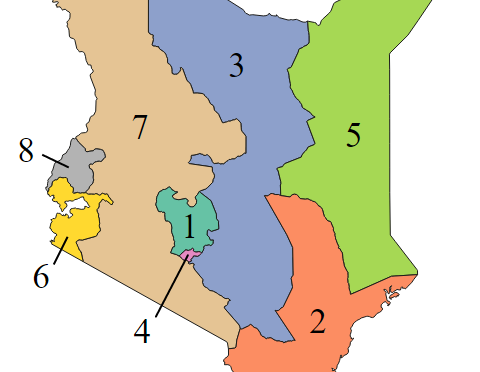
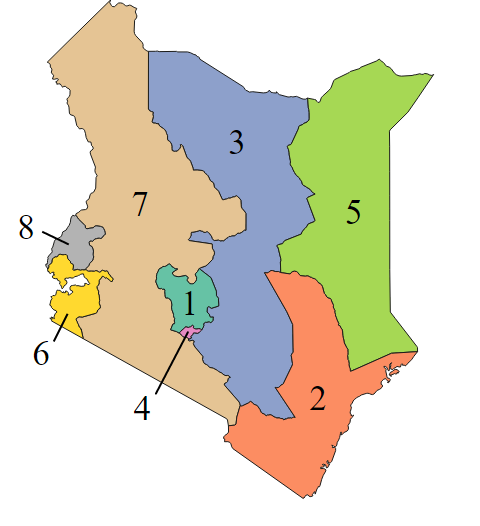
 

Elgeyo Marakwet County

Elgeyo-Marakwet County

Flag of Elgeyo Marakwet

Location in Kenya

From Wikipedia, the free encyclopedia

Elgeyo-Marakwet County is one of Kenya‘s 47 counties. Elgeyo Marakwet County is located in the former Rift Valley Province. Its capital and largest town is Iten. It borders the counties of West Pokot to the north, Baringo County to the east, southeast and south, Uasin Gishu to the southwest and west, and Trans Nzoia to the northwest.

Climate

Temperatures range from a minimum of 14 °C to a maximum of 24 °C. Rainfall ranges annually from 400 to 1,400 mm.

Religion and ethnicity

The county is mainly occupied by Keiyo, Sengwer also called Cherangany and Marakwet are part of the larger ethnic grouping of eight culturally and linguistically related ethnic groups known as the Kalenjin.[clarification needed]
Marakwet is a sub-tribe of the Kalenjin. It is made up of the sub-dialects Almoo, Endoow, Markweta (the sub-dialect giving rise to the common name), Sombirir (Borokot) and Kiptaani who presently predominantly live in Marakwet District in the North Rift Valley Province. Some now live in Trans Nzoia East and Uasin Gishu North districts and in other towns.
The name Keiyo or Elgeyo has been used interchangeably to describe the Keiyo people. The latter name is disputed as a corruption of the true name, which was coined by the Uasin-Gishu Maasai, who were the Keiyo’s neighbours in the mid-9th century at the western side of Eldoret.

County government

As of 2015, the County Governor was Alex Tolgos, the Senator was Onesmus Kipchumba Murkomen, and County Women Representative was Susan Kipketer Chebet, all of the United Republican Party, an affiliate of the Jubilee Alliance. The County has four constituencies in the National Assembly, and twenty ward seats in its County Assembly. The Speaker was Albert Kochei.

Elgeyo Marakwet Governor Alex Tolgos


Elgeyo Marakwet senator Onesmus Kipchumba Murkomen


Elgeyo Marakwet Women Representative Susan Kipketer Chebet

County Executive Committee

Person Docket
Morris rotich Education and Technical Training
Anne Kibosia Trade, Co-operatives, Energy and Tourism
Morris Rotich Public Works and Transport
Thomas Rutto Health Services
Eng.Simion Kiplagat Water, Physical Planning and Natural Resources
Dr.Stella Chelagat Youth, Sports, Women and Social Services
Shadrack Yatich Agriculture,Livestock and Fisheries

County Ward Representatives[edit]

Constituency Ward Representative
Marakwet East Kapyego Kiptire Benson Kibet
Marakwet East Sambirir Suter Paul Kipkemoi
Marakwet East Endo Kirop Festus Korir
Marakwet East Embobut/Embulot Chebii Simion
Marakwet West Lela Cherono Charles Chemase
Marakwet West Sengwer Kiprono Kipketer David
Marakwet West Cherang’any/Chebororwa Koech Philemon Kiptoo
Marakwet West Moiben/Kuserwo Chesingany William Cheruiyot
Marakwet West Kapsowar Yego David
Marakwet West Arror Christopher Kibor Kimutai
Keiyo North Kamariny Lagat Kenneth Kibet
Keiyo North Emsoo Cheboiboch Christopher Kangogo
Keiyo North Tambach Keitany Vincent Kiptoo
Keiyo North Kapchemutwa Cherop Rosa
Keiyo South Kaptarakwa Kigen Thomas Kipkorir
Keiyo South Chepkorio Kibet Tecla Jerotich
Keiyo South Soy North Kipchumba Vincent Kipruto
Keiyo South Soy South Cheruiyot Gilbert Kaptugen
Keiyo South Kabiemit Boit Wilson Kipketer
Keiyo South Metkei Chirchir Daniel
Nominated Kaptarakwa Rael Jepiwott Limo
Nominated
Nominated
Nominated
Nominated

[3][4]

Economy[edit]

Economic activity in the county is characterized by mixed farming, which consists mainly of livestock and subsistence farming. Other activities include small business, tourism and fluorspar mining in Kerio Valley. Oil Prospecting by Tullow Oil Company is ongoing in Kerio Valley.

Tourism[edit]

Major Tourist Attractions are

Kerio river


Chebloch gorge


Elgeyo escapment


Elgeyo marakwet valley


Torok waterfall


Paragliding in Kerio Escarpment near Iten.


Rimoi National Park


Constituency Wards
Marakwet East Kapyego · Sambirir · Endo · Embobut/Embulot
Marakwet West Lelan · Sengwer · Cherang’any/Chebororwa · Moiben/Kuserwo · Kapsowar · Arror
Keiyo North Kamariny · Emsoo · Tambach · Kapchemutwa
Keiyo South Kaptarakwa · Chepkorio · Soy North · Soy South · Kabiemit · Metkei

• West Pokot County

• Baringo County

• Uasin Gishu County

• Kabarak

• Trans Nzoia County


The 47 Counties of Kenya

The counties of Kenya are geographical governance areas create by the 2010 Constitution of Kenya as the units of devolved government.

There are 47 counties whose size and boundaries are based on the 47 legally recognised Districts of Kenya. That is based on the pre 1992 Districts of Kenya The counties’ names are set out in the First Schedule of the Constitution of Kenya.

Establishment[edit]

County governments were established in 47 counties (largely), after the scheduled general elections in March 2013.

List of counties[edit]

Under the new constitution, Kenya is now divided into 47 counties for administrative purposes. They are grouped below according to the former region of which they were part, with their areas and populations as of the 2009 census:[5]

Code County Region Area (km2) Population
(2009 Census)
HQ
1 Mombasa (County) Coast 212.5 939,370 Mombasa (City)
2 Kwale Coast 8,270.3 649,931 Kwale
3 Kilifi Coast 12,245.9 1,109,735 Kilifi
4 Tana River Coast 35,375.8 240,075 Hola
5 Lamu Coast 6,497.7 101,539 Lamu
6 Taita–Taveta Coast 17,083.9 284,657 Mwatate
7 Garissa North Eastern 45,720.2 623,060 Garissa
8 Wajir North Eastern 55,840.6 661,941 Wajir
9 Mandera North Eastern 25,797.7 1,025,756 Mandera
10 Marsabit Eastern 66,923.1 291,166 Marsabit
11 Isiolo Eastern 25,336.1 143,294 Isiolo
12 Meru Eastern 6,930.1 1,356,301 Meru
13 Tharaka-Nithi Eastern 2,409.5 365,330 Kathwana
14 Embu Eastern 2,555.9 516,212 Embu
15 Kitui Eastern 24,385.1 1,012,709 Kitui
16 Machakos Eastern 5,952.9 1,098,584 Machakos
17 Makueni Eastern 8,008.9 884,527 Wote
18 Nyandarua Central 3,107.7 596,268 Ol Kalou
19 Nyeri Central 2,361.0 693,558 Nyeri
20 Kirinyaga Central 1,205.4 528,054 Kerugoya / Kutus
21 Murang’a Central 2,325.8 942,581 Murang’a
22 Kiambu Central 2,449.2 1,623,282 Kiambu
23 Turkana Rift Valley 71,597.8 855,399 Lodwar
24 West Pokot Rift Valley 8,418.2 512,690 Kapenguria
25 Samburu Rift Valley 20,182.5 223,947 Maralal
26 Trans-Nzoia Rift Valley 2,469.9 818,757 Kitale
27 Uasin Gishu Rift Valley 2,955.3 894,179 Eldoret
28 Elgeyo-Marakwet Rift Valley 3,049.7 369,998 Iten
29 Nandi Rift Valley 2,884.5 752,965 Kapsabet
30 Baringo Rift Valley 11,075.3 555,561 Kabarnet
31 Laikipia Rift Valley 8,696.1 399,227 Nanyuki
32 Nakuru Rift Valley 7,509.5 1,603,325 Nakuru
33 Narok Rift Valley 17,921.2 850,920 Narok
34 Kajiado Rift Valley 21,292.7 687,312 Kajiado
35 Kericho Rift Valley 2,454.5 752,396 Kericho
36 Bomet Rift Valley 1,997.9 730,129 Bomet
37 Kakamega Western 3,033.8 1,660,651 Kakamega
38 Vihiga Western 531.3 554,622 Vihiga
39 Bungoma Western 2,206.9 1,375,063 Bungoma
40 Busia Western 1,628.4 743,946 Busia
41 Siaya Nyanza 2,496.1 842,304 Siaya
42 Kisumu Nyanza 2,009.5 968,909 Kisumu(City)
43 Homa Bay Nyanza 3,154.7 963,794 Homa Bay
44 Migori Nyanza 2,586.4 917,170 Migori
45 Kisii Nyanza 1,317.9 1,152,282 Kisii
46 Nyamira Nyanza 912.5 598,252 Nyamira
47 Nairobi (County) Nairobi (Province) 694.9 3,138,369 Nairobi (City


The 8 Provinces of Kenya

Before the 2010 Constitution of Kenya, the Republic of Kenya was administratively subdivided into eight provinces. Each province was headed by a provincial commissioner (PC) appointed by the president.

These provinces were further subdivided into districts. The total number of districts before the district creation frenzy of the 1990s was 46 (excluding Nairobi) each under District Commissioner (DC). Districts were divided into divisions under a Division Officer (DO) and then further into to 2,427 locations and then 6,612 sub-locations.

  1. Central
  2. Coast
  3. Eastern
  4. Nairobi
  5. North Eastern
  6. Nyanza
  7. Rift Valley
  8. Western
1 Mombasa Coast 212.5 939,370 Mombasa (City)
2 Kwale Coast 8,270.3 649,931 Kwale
3 Kilifi Coast 12,245.9 1,109,735 Kilifi
4 Tana River Coast 35,375.8 240,075 Hola
5 Lamu Coast 6,497.7 101,539 Lamu
6 Taita-Taveta Coast 17,083.9 284,657 Voi
7 Garissa North Eastern 45,720.2 623,060 Garissa
8 Wajir North Eastern 55,840.6 661,941 Wajir
9 Mandera North Eastern 25,797.7 1,025,756 Mandera
10 Marsabit Eastern 66,923.1 291,166 Marsabit
11 Isiolo Eastern 25,336.1 143,294 Isiolo
12 Meru Eastern 5,127.1 1,356,301 Meru
13 Tharaka-Nithi Eastern 2,409.5 365,330 Chuka
14 Embu Eastern 2,555.9 516,212 Embu
15 Kitui Eastern 24,385.1 1,012,709 Kitui
16 Machakos Eastern 5,952.9 1,098,584 Machakos
17 Makueni Eastern 8,008.9 884,527 Wote
18 Nyandarua Central 3,107.7 596,268 Ol Kalou
19 Nyeri Central 2,361.0 693,558 Nyeri
20 Kirinyaga Central 1,205.4 528,054 Kerugoya / Kutus
21 Murang’a Central 2,325.8 942,581 Murang’a
22 Kiambu Central 2,449.2 1,623,282 Kiambu
23 Turkana Rift Valley 71,597.8 855,399 Lodwar
24 West Pokot Rift Valley 8,418.2 512,690 Kapenguria
25 Samburu Rift Valley 20,182.5 223,947 Maralal
26 Trans Nzoia Rift Valley 2,469.9 818,757 Kitale
27 Uasin Gishu Rift Valley 2,955.3 894,179 Eldoret
28 Elgeyo-Marakwet Rift Valley 3,049.7 369,998 Iten
29 Nandi Rift Valley 2,884.5 752,965 Kapsabet
30 Baringo Rift Valley 11,075.3 555,561 Kabarnet
31 Laikipia Rift Valley 8,696.1 399,227 Rumuruti
32 Nakuru Rift Valley 7,509.5 1,603,325 Nakuru
33 Narok Rift Valley 17,921.2 850,920 Narok
34 Kajiado Rift Valley 21,292.7 687,312 Kajiado
35 Kericho Rift Valley 2,454.5 752,396 Kericho
36 Bomet Rift Valley 1,997.9 730,129 Bomet
37 Kakamega Western 3,033.8 1,660,651 Kakamega
38 Vihiga Western 531.3 554,622 Vihiga
39 Bungoma Western 2,206.9 1,375,063 Bungoma
40 Busia Western 1,628.4 743,946 Busia
41 Siaya Nyanza 2,496.1 842,304 Siaya
42 Kisumu Nyanza 2,009.5 968,909 Kisumu
43 Homa Bay Nyanza 3,154.7 963,794 Homa Bay
44 Migori Nyanza 2,586.4 917,170 Migori
45 Kisii Nyanza 1,317.9 1,152,282 Kisii
46 Nyamira Nyanza 912.5 598,252 Nyamira
47 Nairobi Nairobi 694.9 3,138,369 Nairobi (City)


IEBC tender Scandal

The independent ectoral and and Boundaries Commission went flat out award contracts to certain firms, against all legal and regulatory challenges, to the loss of the taxpayer. IEBC also bought some items at three times the market rate. Even then the paid for materials that were delivered Ieng a.fret the 2017 elecfion ~d ended. Besides Safran which enjoyed inexplicable privilege, IEBC – against myriad court cases and petitions to the procurement regulatory authority – went flat, out to ensure Al Ghurair Printing and PUblisbing LLC, a DUbitl,based compaJWwhith-the Opposition linked to the Jubilee candidate, printed and delivered ballot papers. “Engagement of Al Ghurair was wrought with litigation and the commission position was manifest all through in the defence of the company. In fact, IEBC didn’t provide room for alternative. It was fixated on this company;’ says an insider. A South African company in­ terested in the contract had its offer in dead water. Ren-Form CC, proposed to print and deliver presidential ballot papers in less than a fortnight, if contracted. “For delivery to (Jomo Ken­ yatta International Airport) by not later than August 2, 2017 provided production starts by July 21;’ Jean-Pierre du Sart, its sales director wt ote back to IEBC on July 14, 2017. Presidential papers The presidential papers for the General Election arrived on August 1, 2017. Implicitly, IEBC wasn’t time-strapped as it claimed to justify the contract award to Al Ghurair. The offer followed a plenary resolution that an alternative interJ;:).atio~ i:lom,pany ‘De identi­ fied. to procure the ballmS’ in line with a court judgment that almost disrupted IEBC ‘s plan to award Al · Ghurair. The Court annulled the contract on the basis that IEBC failed to conduct the statutory public participation. Instructively, Ren Form CC isn’t a run-of-the-mill company; it has supplied ballots in 22 African countries, including Zambia on three occasions before losing out to Al Ghurair in the August 2016 elections. Thus, it was plainly fallacious for the IEBC to claim that it was time-strapped and that alternative suppliers lacked the technical capability. As it turned out, IEBC reached out to Ren Form CC as a matter of procedure. Notably, Al Ghurair printed an extra 1.2 million (instead of the 196,115 agreed at the Plenary) presidential ballots in contro- ‘theft was versial circumstances, a matter that further complicated the al­ ready strained relations between Chebukati and Chiloba. On August 1, 2017 -just a week to election – Chebukati asked Chiloba to explain “who gave (him) authority to print excess of 1.2 million instead of 196,115 ballot papers (1 per cent of the total requisition). The 1 per cent was to cater for spoilt ballots and “adverse circumstances “as well as reduce the risk of mismanagement of ballot papers”. Inhis respease, Chiloba a~teed that plenary had resolred that, in­ deed, 1 per cent extra ballots were to be prin~ed but the,ml:li1ber yta$ to be “rounded off to the nearest 50”. How IEBC resolved this isn’t known, for the matter appeared to have ended with Chiloba’s response. However, according to the Auditor General, “verification undertaken in 35 sampled coun­ ties across the country there were falsification of records on issued ballot papers maintained at IEBC warehouse in Nairobi compared with actual receipts in the field re­ sulting in a variance of 2,534,904 ballot papers which have not been accounted for”. The Al Ghurair contract was signed just days after IEBC’s then head of procurement Lawy Aura was sent packing “With immediate effect” .for de.clining to give a favourable opinion on the proposed award to Ghurair, according to sources. At the end, the contract for printing of ballot papers went through open tender, restricted tender then direct procurement. Al Ghurair survived this bizarre process. Apart from the controver­ sy-strewn contracts for KIEMS and ballot papers, almost all other financial deals had a tint of fraud. The acquisition of data bundles can only pass for a spending binge. IEBC acquired Sh127.6 million worth of data bundles (149,640GB or 149TB) from Safaricom, Telkom and Airtel. Yet when the Auditor General analysed Internet use on the SIM cards, only 605.3GB of bundles worth Sh515,269 had been used – a mere 0-4 per cent of the actjlli.<tition. 1t’s :incemprebensible that IEBC didn’t enter into a postpaid ar­ rangement with the telcos. Either elements in the secretariat were out to make a fast kill or an extrav­ agant IEBC failed to pre-quantify the amount of data required before issuing the contract. Con­ sequently, Sh127.08 million went to waste or wasl’trlsapprdplliat.ed. But more confoi:mdirig is a case where IEBC cloned contracts – a situation that resulted in the loss of billions of shillings. The work was replicated, given different titles and then awarded separately yet the goods and ser­ vices involved could have been performed by a single supplier. Perhaps IEBC would argue that it sought to spread risks. But in real sense, the Commission did this to benefit multiple vendors, ‘theft was versial circumstances, a matter that further complicated the al­ ready strained relations between Chebukati and Chiloba. On August 1, 2017 -just a week to election – Chebukati asked Chiloba to explain “who gave (him) authority to print excess of 1.2 million instead of 196,115 ballot papers (1 per cent of the total requisition). The 1 per cent was to cater for spoilt ballots and “adverse circumstances “as well as reduce the risk of mismanagement of ballot papers”. Inhis respease, Chiloba a~teed that plenary had resolred that, in­ deed, 1 per cent extra ballots were to be prin~ed but the,ml:li1ber yta$ to be “rounded off to the nearest 50”. How IEBC resolved this isn’t known, for the matter appeared to have ended with Chiloba’s response. However, according to the Auditor General, “verification undertaken in 35 sampled coun­ ties across the country there were falsification of records on issued ballot papers maintained at IEBC warehouse in Nairobi compared with actual receipts in the field re­ sulting in a variance of 2,534,904 ballot papers which have not been accounted for”. The Al Ghurair contract was signed just days after IEBC’s then head of procurement Lawy Aura was sent packing “With immediate effect” .for de.clining to give a favourable opinion on the proposed award to Ghurair, according to sources. At the end, the contract for printing of ballot papers went through open tender, restricted tender then direct procurement. Al Ghurair survived this bizarre process. Apart from the controver­ sy-strewn contracts for KIEMS and ballot papers, almost all other financial deals had a tint of fraud. The acquisition of data bundles can only pass for a spending binge. IEBC acquired Sh127.6 million worth of data bundles (149,640GB or 149TB) from Safaricom, Telkom and Airtel. Yet when the Auditor General analysed Internet use on the SIM cards, only 605.3GB of bundles worth Sh515,269 had been used – a mere 0-4 per cent of the actjlli.<tition. 1t’s :incemprebensible that IEBC didn’t enter into a postpaid ar­ rangement with the telcos. Either elements in the secretariat were out to make a fast kill or an extrav­ agant IEBC failed to pre-quantify the amount of data required before issuing the contract. Con­ sequently, Sh127.08 million went to waste or wasl’trlsapprdplliat.ed. But more confoi:mdirig is a case where IEBC cloned contracts – a situation that resulted in the loss of billions of shillings. The work was replicated, given different titles and then awarded separately yet the goods and ser­ vices involved could have been performed by a single supplier. Perhaps IEBC would argue that it sought to spread risks. But in real sense, the Commission did this to benefit multiple vendors, of Oracle database and security solution, which also comprised the review and assessment of the election technology, was awarded to Oracle Technology Systems (Kenya) Ltd via direct procure­ ment. It was controversial. First, Oracle itself reportedly drew the terms of reference (ToRs). Second, there was no contract between the Commission and this vendor. Instead, there were signed ordering documents. Third, the KPMG audit of the voter register had already identi­ fied the inherent security lapses in the IEBC technology and had suggested solutions. Inflated cost Fourth, the Commission’s ICT department had requisitioned pur­ chase of Oracle database solutions and licences at Sh8o million but it was awarded for Sh273 million. Yet, despite the inflated cost, Oracle partially delivered – it conducted one training instead of six. Database Vault, Real Ap­ plication Cluster (that enables sharing of resources in form of cloud architecture) and training were “not complete”, according to audits. IEBC contracted Africa Neuro­ tech Systems Ltd to supply. Install, implement, and commis ion and support its primary and secondary data centre equipment. It was paid Sh249.3 million against contract budget of Sh130 million. But ac­ cording to the Auditor General, the Commission “paid the vendor before testing and commissioning the equipment”. The data centre wasn’t ready at the time of August Election. Neurotech Systems Ltd is owned by Dan Kinyua Njuguna. A multimillion-shilling company with a presence in five African countries, it is intriguingly clas­ sified by the Public Procurement Oversight Authority (PPOA) among “disadvantaged” SME companies – those earmarked for Affirmative Action. Despite non-compliance, IEBC still engaged Neurotech – through direct procurement – to supply and deliver storage expansion for the converged infrastructure, at a cost of Sh165.7 million. Sh165.7 million was paid against a user requisition of Sh124 million. The equipment was delivered on January 9, 2018 – well after the FPE. In the end, IEBC paid Neu- rotech Sh415 million for facilities never used during the two elections. As regards Telkom, it wasn’t among those pre-qualified for the tender (co-location services for data centre and disaster recovery site). However, in unclear terms, IEBC’s evaluation committee recommended it be awarded the contract, which was inexplicably overvalued by Sh4.92 million. Once it became apparent that these companies had defaulted on their contracts, IEBC and Safran went into panic mode. The French company wrote to the Commission to be allowed to use Japan’s Nippon Telegraph and Telephone Corpo­ ration (NTT) cloud services. The Commissioner would later accept the offer, even without a contract between the two, in a letter dated July 28, 2017. Notably, the country went into the election without a backup server. IEBC didn’t have any data recov­ ery infrastructure. And this partly explains why it couldn’t respond to Nasa’s demand to access the server. Nonetheless, IT experts question why IEBC dealt with NTT through Safran Identity yet the Japanese company has local representation – Dimension Data (which oper­ ates in Kenya as Dimension Data Kenya, Internet Solutions Kenya and Plessey Kenya). “The Commission needs to jus­ tify contracting process for cloud services while at the same time in­ curs Sh1,002,813,667.97 on similar services that were never utilised;’ says the Auditor Generai. Our investigations reveal that IEBC awarded co:p,t:rac:t for aloud services despite an advisory by the Communication Authority of Kenya against the use of private servers. The Authority, in response to the commission’s proposal to use a private cloud server to supplement its primary and secondary disaster recovery sites, warned that sensitive data couldn’t be placed in private hands. Intriguingly, the cost for cloud services during FPE was Sh50.7 Million more than during the Gen­ eral Elections. On June 20, 2017, the then IT chief Chris Msando presented a paper on the transmissiQn_of results for the August elections in which he indicated that some polling stations were out of the 3G and 4G network coverage required for KEMS transmission of results. An analysis found 11,115 stations report­ edly outside the network coverage. To cover this, IEBC proposed 1,000 and 1500 satellite units (at cost of Sh550 million and Sh825 million respectively) to be used in results from outside the requisite network. The first batch of Airtel’s 1,000 Thuraya data modems and SIM cards were distributed to constituencies before the Aug 8 elections. However, in the end, only 339 modems and SIM cards with 4GB were used. The rest, according to IEBC internal audit, were deliv­ ~ed OOAUgt!St 24, 2Ql{, way after the polls – altllopgh the Auditor General says that they were in fact supplied much later, on October 5, 2017. Yet, despite this, IEBC still went ahead to give out another contract for 1,000 units for FPE and which were received in January 2018. I The Commission appeared not interested in the devices it had procured for the August polls or the unused 600. At the end, owing to delay in delivery, IEBC “reactivated and reused” the devices, according to Auditor General. Same supplier That apart, a ballot box that cost Sh1,800 during the August election was later procured at Sh2,500 for the FPE. This was in spite of the similarity in specifications and same supplier. Thus IEBC lost Sh27.9 million (from purchase of 42,927 boxes) in inflated costing. Mini Mix Agencies was on March 3, 2017 awarded the Sh19.5 million contract to supply and deliver 3,696,000 security seals at unit price of Sh5.30. However, it delivered just 2,001,600 units on July 22, 2017. The rest, 1,694,400 seals, were sup­ plied on October 19, 2017 – more than 2 months after the election. Yet IEBC didn’t terminate the contract even after the supplier had stalled. Instead, the commission rushed to contract Ramaas Supplies Ltd, through direct procurement, for 500,000 seals at Sh24.5 million (at Sh49 a unit) to mitigate the shortfall. Instructively, this company had failed at the preliminary evaluation stage during the tender process, having quoted Sh18.10 a unit. High Court Judge Pauline Nyam­ weya last October ruled that the Sh350 million contract to provide “strategic communication and in­ tegrated media campaign services” was irregular. The Secretariat had deviated from plenary resolution and inex­ plicably hired ScanAd. All said, “election 2017 was a swindle;’ according to a member of the now-defunct Interim Independ­ ent Electoral Commission. “The theft was beyond the imaginable:’